Introducing LONGLINK
Generative AI has changed how software is built, opening two paths from traditional coding.
In one direction, we delegate the work to an agent and trust its implementation, hoping that tomorrow's model will fix today's issues. Without careful review, the solution can gradually become a black box that is difficult to audit, debug, and maintain.
The other path keeps human judgment at the center. AI serves as a tool that accelerates the work, while humans remain responsible for key decisions, architecture, and validation. This keeps the development process transparent, making assumptions, trade-offs, and errors easier to identify and understand.
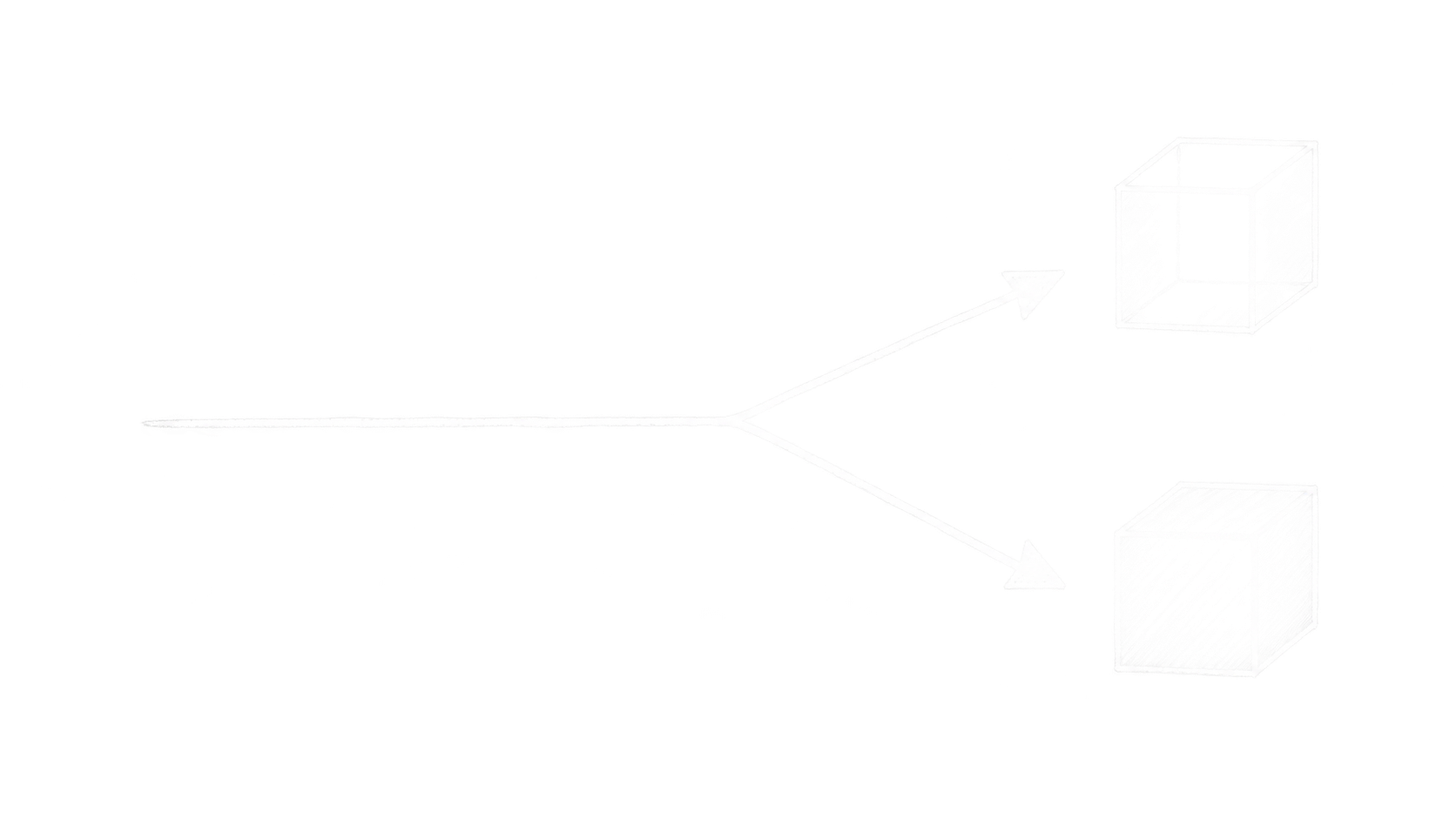
The difference becomes clearer over time. A fast initial implementation can come at the cost of long-term maintainability. Without sound engineering and sufficient oversight, technical debt accumulates, and the initial speed advantage can be eroded by the cost of maintaining and changing the software.
LongLink is built around this challenge. Three fundamental principles guide its design and development.
Keep it simple
A clear, simple process is easier to operate, understand, and audit. It is also less expensive to maintain. As complexity grows, keeping things simple requires deliberate choices.
Own the process
Ownership means retaining control over your data, workflows, and the software that supports them. It also means being accountable for how the process works and ensuring it fits your requirements. Geopolitical uncertainty makes understanding and managing these dependencies even more important.
Separate responsibilities
People remain responsible for decisions and judgment; machines execute clearly defined tasks. Business users define how the work should happen, while developers translate those requirements into reliable software.

The vision
Modern software development provides a useful model. Developers can work locally, while shared repositories and cloud services bring together code, history, collaboration, and automated checks. Changes can be understood, reviewed, tested, and traced over time.
A well-maintained repository brings implementation, documentation, and tests into one place. Combined with access to relevant tools and services, this gives both developers and AI agents the context they need to work with less guesswork.
Business operations rarely have the same structure. Data and processes are often scattered across legacy systems, low-code platforms, spreadsheets, databases, documents, and disconnected applications. Understanding how a process works means piecing together information from all of them.
LongLink aims to bring the discipline of software development to business applications: a shared platform where processes, application logic, data, and workflows can be managed together. It provides the foundation to build, deploy, operate, and govern solutions, giving developers, business users, and agents a structured environment in which to work.
How it works
Building a custom solution from end to end gives you the greatest flexibility. You can shape it around the exact requirements of a process. That flexibility comes at a cost, however: everything surrounding the core application logic must also be implemented and maintained.
Deployment is an obvious example. The application needs somewhere to run, along with the infrastructure to keep it available. Managed deployment platforms simplify this work.
Then come the services the application depends on: authentication, permissions, storage, and user management. Existing services provide these capabilities through APIs and SDKs—interfaces and libraries that help developers connect them to an application.
These services reduce the amount of software you need to build, but integrating them remains part of the work. Developers still need to connect them to the application logic, make them work together, and maintain those connections as the solution evolves.
 ServicesDeployment
LongLink brings these common capabilities into a shared foundation, allowing developers to focus on the logic of the process itself.
Its focus is internal business applications, where software must align closely with an organization's workflows, responsibilities, and requirements. The process determines how the application should work.
The application logic remains conventional Python code. Python offers readable syntax and a broad ecosystem, with established libraries such as FastAPI, Pydantic, SQLAlchemy, and Alembic providing the building blocks for APIs, validation, data access, and database migrations.
The code lives in a repository and follows standard software-engineering practices: testing, code review, versioning, automated deployment, and releases.
We call this a Solution: a repository that captures how a process works through its code, configuration, documentation, and tests. It can be inspected, reviewed, maintained, and adapted as requirements, processes, or regulations change.
LongLink provides the infrastructure around each Solution. Each organization receives a dedicated database and storage bucket, while every deployed Solution runs in an isolated namespace with its own resources.
Developers focus on implementing the process, business users define and validate its requirements, and LongLink handles the common infrastructure needed to run it.
What’s next
The core architecture is complete, and the public beta is live. Try it, test it, and break it.
LongLink is open source. Leave us a star on GitHub(opens in new tab) and help us build what comes next.
For questions, feedback, or collaboration, reach out at info@longlink.dev.